

This summer, we’re offering reading recommendations on the theme of Intelligence. This is the first in a series of posts from the staff at the John Templeton Foundation. Enjoy!
 Drunk: How We Sipped, Danced, and Stumbled Our Way to Civilization
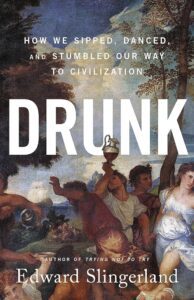 Drunk: How We Sipped, Danced, and Stumbled Our Way to Civilization
In Drunk, Edward Slingerland explores the relationship between alcohol consumption and the development of civilization, from ancient cultures to the present. While agriculture has been historically considered the primary factor in human settlement and the rise of large-scale civilizations, Slingerland claims that agriculture itself was driven by the human fascination with chemical intoxication.
Known as the “Beer Before Bread” theory, this hypothesis is supported by examples around the world, including the ritualistic role of chicha in the Inca Empire in the third century BCE and the popularity of pituri in Aboriginal Australia. Humans developed their niche via culture and community, and Slingerland sees alcohol, and other chemical intoxicants, as necessary for both to exist and function.
In tandem with his historical analysis, Slingerland also dissects the neurological impact of alcohol. He focuses on the pre-frontal cortex, the part of the brain that directs logical thinking. Alcohol slows down the activity in this area, which could explain why humans feel more relaxed and make less logical decisions when inebriated. While exploring studies of how adults perform on creative tasks when the pre-frontal cortex is altered, Slingerland advocates for the advantages of consuming alcohol to enhance novel thinking. He shares that many creative and scientific professionals claim they generate their best ideas when they are not so intently focused on the task or problem they must solve.
Another important aspect of human life is socializing. Slingerland emphasizes alcohol’s abilities as a “social lubricant” and “truth serum,” and how important these two functions are for society. An ancient Chinese text from the third century BCE declares that “harmony between states is brought about through the drinking of wine,” highlighting that when adults are chemically intoxicated they can experience a bond amongst friends and foes alike. Slingerland points out how critical this balance is in both prevention and solving of conflicts. The bonding also brings people together, setting a common culture built on trust and common interests. For civilizations to flourish, Slingerland stresses that it requires people who are sensible, but with child-like imaginations.
Whether or not he overstates his case for the central role of alcohol, Slingerland challenges us to reconsider what propels cultural innovation. While intelligence is essential, being strictly “sober-minded” may hold us back from giving voice to our more creative impulses. To better understand the dramatic historical changes of the past 10,000 years, we should not overlook the role of revelry, silliness, and altered states of mind. Inebriated or not, sometimes we just need to loosen up.