

This summer, we’re offering reading recommendations on the theme of Intelligence. This is the first in a series of posts from the staff at the John Templeton Foundation. Enjoy!
 Don Quixote (Miguel de Cervantes)
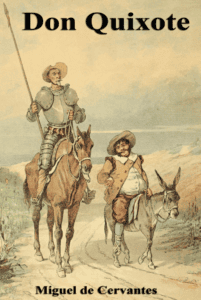 Don Quixote (Miguel de Cervantes)
Written over 400 years ago, Miguel de Cervantes’ Don Quixote is regarded by many as the first modern novel, and some consider it to be the greatest novel of all time. For many Americans, however, the book is not as familiar as Dale Wasserman’s 1965 musical, “Man of La Mancha,” which draws heavily from the novel to tell the story of the delusional but would-be knight errant and his quest to right all wrongs, to aid the afflicted, and to secure the affection of his beloved fair lady, Dulcinea del Toboso.
The novel operates on many levels at once; without feeling cumbersome, there are stories within stories and stories about stories galore. Its observations about the foibles of human nature alone are worth the price of admission. Despite having been published in the early seventeenth century, the novel offers tragicomic reminders of how common and enduring our supposedly unique worries, frustrations, and complaints really are. There is a reason some works of literature are timeless: Cervantes offers the reader not only a fascinating window into his own era, but also a mirror in which we can still see ourselves, albeit somewhat uncomfortably.
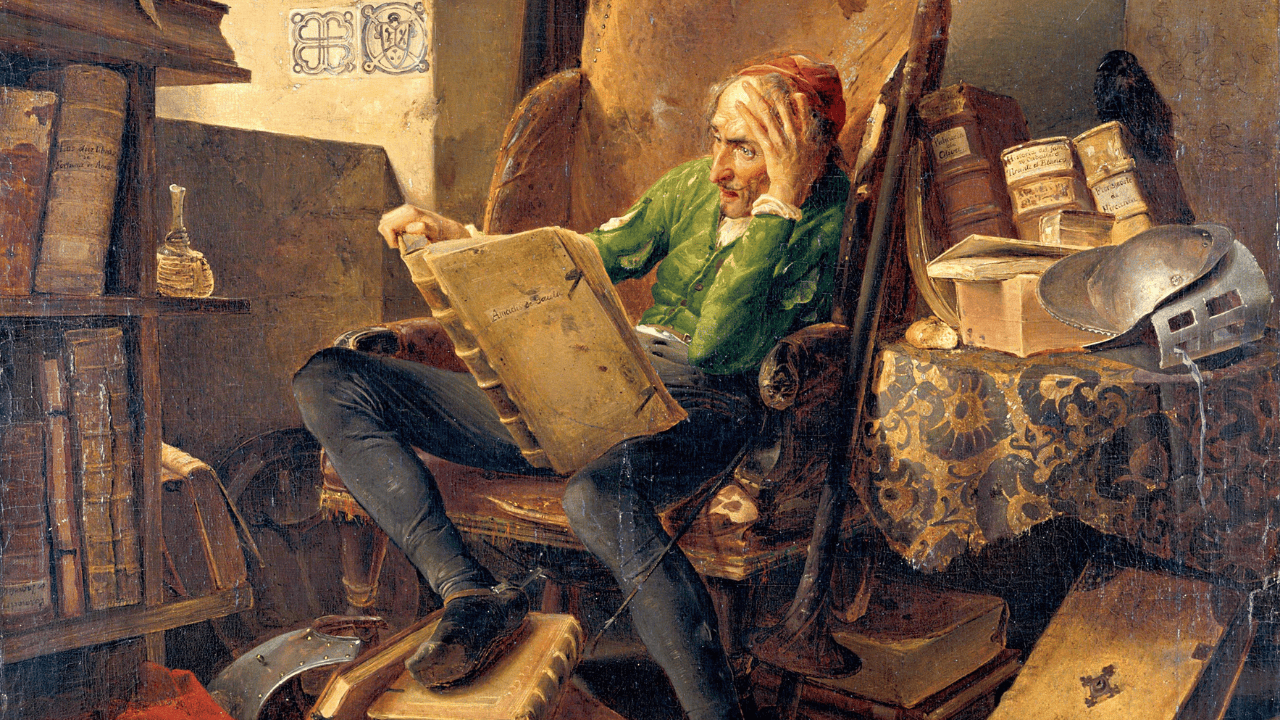
The character of Sancho Panza, the simpleton who becomes Don Quixote’s somewhat skeptical but usually faithful squire, is of particular fascination to me. Sancho is not the brightest man, but he often (though not always) sees through his master’s delusions. Whenever Sancho questions one of Don Quixote’s particularly outrageous and unrealistic claims (for example, that a windmill is, in actuality, not a windmill but a monster that must be slayed), Don Quixote’s replies are always unanswerable: Sancho cannot see what Don Quixote sees because of the work of enchanters. There is no convincing Don Quixote of the truth; his beliefs are immune to common standards of evidence.
However, throughout the novel, Sancho is often stunned by a recurring puzzle: Don Quixote, who spouts endless nonsense about dragons, giants, and enchanters, can spout brilliant ideas about all sorts of topics: love, justice, duties, relationships, statecraft, commerce, theology, history, literature, etc. So brilliant are these ideas that others, and not just Sancho, also take notice of Don Quixote’s keen intelligence. Thus, it is often the case that this otherwise irrational man possesses deep knowledge and wisdom about some of the most fundamental concerns of human life. Sancho cannot make sense of that. In turn, Don Quixote’s endearing humanity and sage insights, despite all his flaws, continue to draw Sancho, and the reader, nearer.
And so it is that we, as readers, can relate to Sancho. When we are seated next to the otherwise demented uncle at Thanksgiving and listening to his diatribe about some nefarious cabals running the government from some distant planet, or when we are learning from a goofy aunt about how her pets play tricks on her in the night, rearranging her furniture and taking her car out for midnight cruises, we can be confounded by moments of real grace, too. We feel tenderness when that uncle then looks at us lovingly and asks how we are with genuine interest and affection. We feel gratitude when that aunt, upon hearing about our struggles with our jobs or friends or partners, offers some surprisingly intelligent and helpful words of wisdom that provide us comfort.
Thus, there are many things we can take from Don Quixote. It rewards the reader with so much; there is a reason why it is so beloved and so famous. As for me, perhaps its greatest gift is the way it makes sense of intelligence and insight from the most unexpected sources.