

This summer, we’re offering reading recommendations on the theme of Intelligence. This is the first in a series of posts from the staff at the John Templeton Foundation. Enjoy!
 Last of the Curlews (Fred Bodsworth, 1955)
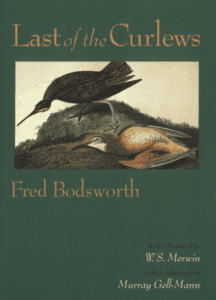 Last of the Curlews (Fred Bodsworth, 1955)
Though originally published in 1955, this story hasn’t aged a day. The protagonist is an Eskimo curlew, a migratory bird that travels back and forth from the Arctic to Argentina’s Patagonia every year of its life. The sheer scale of the annual journey is difficult to comprehend, but the author Fred Bodsworth gives readers a front row seat.
Though the story is fictional, the species is not. Bodsworth conveyed his exquisite knowledge of avian behavior to give his readers a sense of what each day of this vanishing creature’s life could be like. From foraging, courtship, and defending territory, to migrating across an entire hemisphere, the reader accompanies the last of the curlews.
As the title suggests, this was a bird species on the brink of extinction, and likely exists no more. Once present in the skies of North and South America in flocks of millions, the Eskimo curlew was hunted so prodigiously that by the mid-20th century, the few remaining curlews made their transcontinental journeys alone.
In one sense it is a deeply tragic story of human exploitation, short-sightedness, and irreversible loss. However, I came away from this book with another sentiment: there is something truly magisterial about a world that would produce such a remarkable creature, one that could endure journeys of unfathomable distances and make a life for itself across vast stretches of earth and sea.
Like the bird, Bodsworth’s account soars in its narrative. Though I’ve never seen (or had even heard of) the Eskimo curlew, I felt a deep kinship with this creature by means of this literary achievement. I wish every bird, and every species, had a chronicler as adept as Bodsworth. The last of the curlews filled me with awe.