

This summer, we’re offering reading recommendations on the theme of Intelligence. This is the first in a series of posts from the staff at the John Templeton Foundation. Enjoy!
Klara and the Sun (Kazuo Ishiguro, 2021)
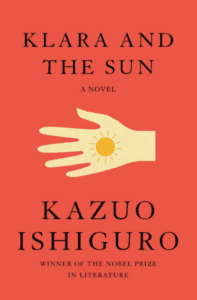
Klara and the Sun, a novel written by Kazuo Ishiguro (winner of the 2017 Nobel Prize in literature) is a story from the first-person perspective of an “artificial friend” named Klara, an AI-robot designed to befriend a human child. It’s a fascinating, empathic portrait of a human-like artificial intelligence, one that caused me to genuinely grapple with what Klara’s emerging intelligence and personality means for our own society as we race toward ever more sophisticated AI. The book also has a subplot where some parents genetically modify their children to give them an intelligence “lift,” and Ishiguro wrestles with the ethics and potential trade-offs involved in making these choices. The book is a poignant, beautiful exploration of which beings we choose to endow with intelligence, what obligations that endowment creates for their welfare, and what we are willing to sacrifice in pursuit of “superior” minds. –Book Recommendation by Rich Bollinger
Project Hail Mary (Andy Weir, 2021)
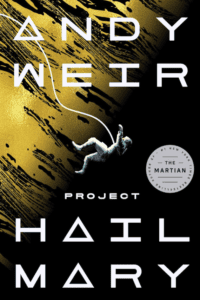 Project Hail Mary (
This entertaining science fiction novel by Andy Weir depicts intelligence and critical thinking as essential survival skills. The main character, Ryland Grace, is a scientist and schoolteacher selected to study an organism that is rapidly dimming the sun and other stars. In less than 50 years, this will result in an ice age that will devastate the Earth, leading to a race to learn why this is happening and how it could be fixed before tragedy strikes. On his way, Grace encounters an alien (whom he names “Rocky”) that, like himself, is on a journey to save his planet.
In this first encounter between a human and alien, the two approach each other in a posture of openness and questioning, not suspicion and hostility. Their shared challenge and personal curiosity override their fears, leading them to work together in ways that transcend species, and even planetary life, by using mathematics, sound, and art.
Ultimately, what I found most profound about this story is that the human protagonist learns more about himself as a person and what he is capable of through his interaction with an extraterrestrial being. Such a possibility is no doubt a major driver for both scientific and literary ambitions. –Book Recommendation by Stephanie Morris