


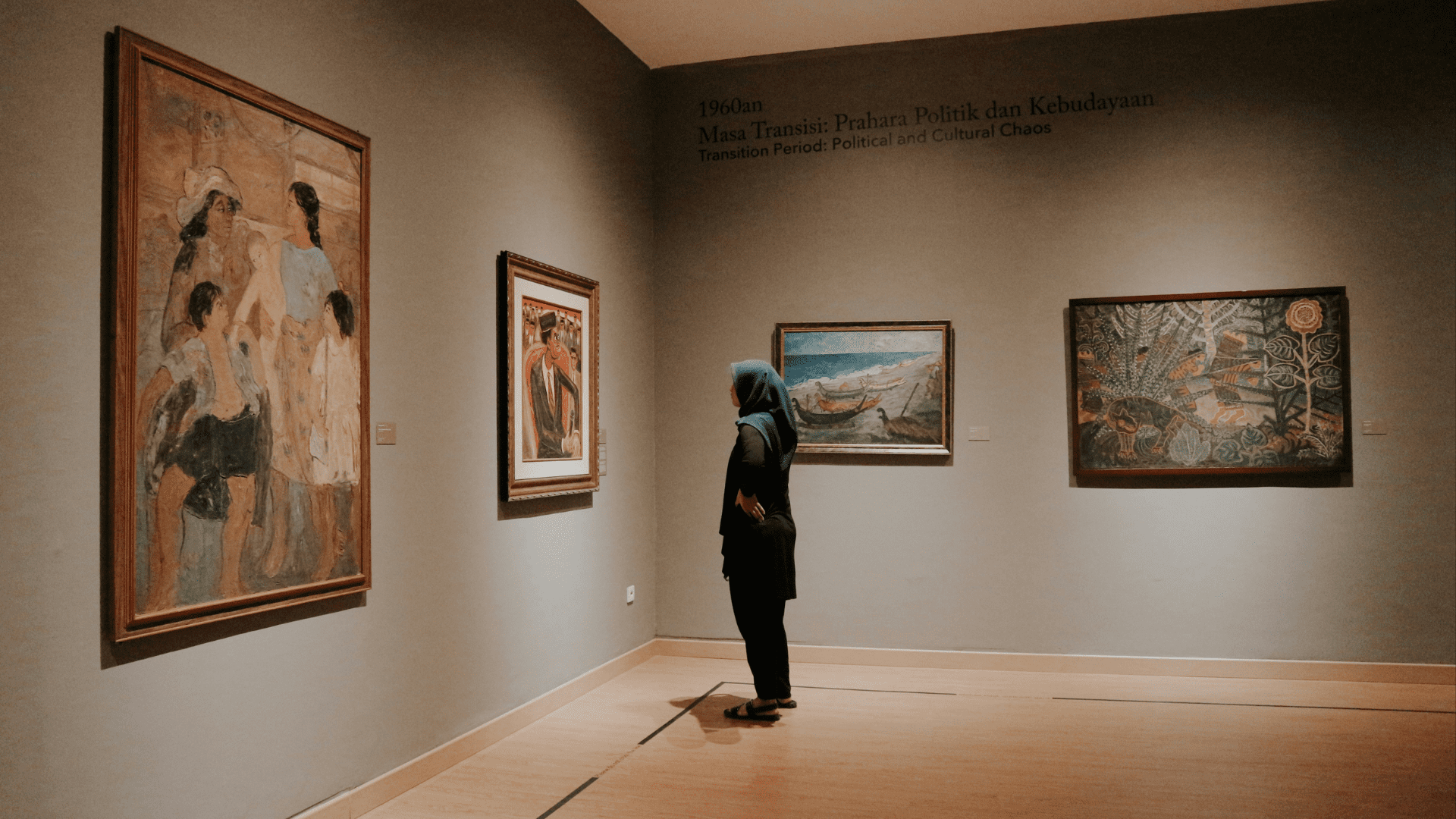
Lift your head.
Beyond the incessant scrolling, crowded calendar, and frantic to-do list,
There is a vast, beautiful world waiting to be seen.
Wonders—both ordinary and extraordinary—surround us every day, if we pause to look and consider them.
Beauty has long been considered difficult to study and measure—too entangled with personal taste, culture, and feeling to fit easily into a scientific experiment. Yet psychologists, philosophers, and researchers have persisted in searching for ways to understand its effects.
Now, advances in neuroscience, psychology, and social science are allowing researchers to measure what earlier thinkers, from poets to mathematicians, could only describe: how beauty shapes attention, emotion, and even the sense of self. Far from being a decorative extra—a nice-to-have or a frivolous luxury—beauty, whether in the arts, nature, or other patterns of daily life, is fundamental to human cognition and flourishing.
Across disciplines, scientists are finding that moments of beauty alter how we think, feel, and relate to one another. Contemplating beauty can widen perspective. Being moved by it can reorganize the sense of self. Sharing it can deepen connection and purpose.
Far from superficial, beauty is rich, robust, and profoundly human.
The Cognitive Shift of Beauty
At Cambridge’s Kettle’s Yard gallery, psychologist Simone Schnall, Director of the Cambridge Body, Mind and Behaviour Laboratory and Fellow of Jesus College, turned art appreciation into an experiment. Visitors viewed a quiet row of ceramics by Lucie Rie, the late modernist known for her luminous glazes and balanced, human-scaled forms. The pieces—teapots, bowls, and cups—were modest and beautiful, but not exhilarating. Half of the participants were asked to judge the beauty of each object, while the others completed a neutral visual task.
The contrast revealed something striking: Engaging with even subtle forms of beauty altered how people thought. Those who consciously evaluated beauty showed a measurable shift toward a mindset linked to perspective and abstraction.
“It’s a process called psychological distancing,” says Schnall. “It’s kind of zooming out from your own personal perspective, your concerns…and detaching yourself, distancing yourself in some way from that. And what we found is that appreciating the beauty of certain art objects can do that.”
Contemplating beauty, she explained, pulls us outside our own thoughts and into engagement with the world. It helps people step back from the immediacy of their worries and see from a broader vantage point that daily concerns can obscure. Her research also underscores that this response to beauty is distinct from awe.
“It’s not awe,” says Schnall. “Awe is about vastness…about feeling small and insignificant in the face of something that’s overwhelming …What we looked at was simply appreciating the beauty of certain art objects.” Awe can humble; beauty, she observed, creates distance without diminishment—appreciation rather than overwhelming.
Philosophers have long proposed that aesthetic contemplation allows a kind of unselfing—the mind loosening its grip on the self’s urgent concerns. Schnall’s data provides empirical grounding for that intuition. “Our research indicates that engaging with the beauty of art can enhance abstract thinking and promote a different mindset to our everyday patterns of thought, shifting us into a more expansive state of mind,” says Schnall.
That expansive mindset may help explain why beauty so often precedes insight. By loosening our fixation on goals and details, aesthetic attention creates the cognitive space where new understanding can emerge—where ideas connect and meaning coheres.
Schnall notes this isn’t confined to galleries. “There’s beauty in everyday life,” she said. “The key is to really appreciate it as such, to focus on it, to consciously engage with it rather than just walking past and being caught in your thoughts.”
Even a small act of noticing—a glint of light, a pattern of shadow—can reset the mind. As she’s explained, it’s like putting on the brakes, slowing down enough to see the big picture.
Beauty and the Art of Looking Up
This research is an invitation to untether from the myopic, tech-necked world of the smartphone and look up—to rejoin the larger, living world of beauty that surrounds us. Aesthetic moments—whether in a museum, a cathedral, or the curve of a teacup—create mental space.
Art critic John Berger, in his 1972 classic book and BBC television series “Ways of Seeing,” argued that art is never just what it appears to be—that how we see is shaped by culture, habit, and power.
Decades later, science is revealing a complementary truth: beauty, when we stop to evaluate it rather than merely notice it, doesn’t mirror the mind; it moves it.
It opens our focus, widening how we see and what we understand.
In that expansion, outward from the self and back toward the world, beauty becomes a quiet catalyst, helping us think more freely and clearly.
When the Brain Meets the Beautiful
If Schnall shows how beauty helps us step back, loosening the grip of the everyday, then neuroscientist Edward Vessel, a psychologist at the City College of New York (CCNY), explores what happens when beauty draws us inward. His research reveals that the moment of being moved by art engages the brain’s deepest networks, reshaping how the self meets the world.
In his lab, volunteers lie in a darkened MRI scanner, eyes fixed on projected paintings, clicking a button to rate how deeply each moves them.
Ordinarily, the brain’s default-mode network, responsible for introspection and memory, dims when we turn our attention outward. “Typically, this internally focused network and the externally focused networks act in opposition,” says Vessel. “But during these moments, they seemed to talk to each other.” When a painting truly moves us, regions tied to self and memory light up alongside those devoted to vision and attention. Vessel described it as the moment “when what’s out there resonates with something in you.” These rare brain states are metabolically intense but psychologically rich—the mind expends energy to integrate a new pattern into the story of who we are.
Aesthetic appeal is a signal that we’ve learned something. “It’s the same system that drives curiosity,” says Vessel. His studies show that people high in aesthetic responsiveness (those more open to being moved by art) report stronger emotional regulation and greater meaning afterward. Beauty, in his view, serves as a kind of learning signal, a “pleasure from understanding.”
Across domains—art, music, nature—Vessel finds that moments of being moved bring the brain’s inner and outer worlds into sync. In those instances, perception and self, align. Beauty, he suggests, is not indulgence but integration: the brain remembering how to be whole.
The Pleasure of Understanding
Vessel’s research suggests that the joy of beauty lies less in novelty than in coherence. When a chord progression resolves or a glacier reveals its blue, the brain’s reward systems respond much as they do to discovery. Beauty shows that understanding itself can feel good.
He calls this the pleasure of understanding—a biological signal that we’ve learned something new about the world or ourselves. “Aesthetic appeal,” Vessel explained, “is tapping into a more basic biological mechanism we have for getting pleasure from understanding.”
Such moments sit at the edge of what we already know: familiar enough to grasp, yet new enough to expand our sense of meaning. People who habitually notice beauty often score higher on measures of purpose and resilience—not because they chase pleasant sensations, but because they practice recognition: the steady act of perceiving pattern and meaning amid life’s complexity.
Beauty as Motivation
Sociologist Brandon Vaidyanathan, Director of the Institutional Flourishing Lab at The Catholic University of America, as well as the founder of Beauty At Work, finds the same dynamic far from galleries and scanners.
In a multi-country study of scientists, he and his colleagues discovered that encounters with beauty, whether in elegant equations or crystalline data, predict higher meaning in work and greater overall well-being.
“There are numerous scientists who told us that it was profound encounters with the beauty of nature that led them to pursue their careers,” he said. Beauty, he explained, is not only sensory but also intellectual.
“Scientists often describe beauty as what keeps them going,” he added. “It motivates their search for understanding.” Those who experience beauty regularly also report deeper collaboration and purpose. “When you have that experience, you want to run and share it with somebody else…you can’t contain it…it galvanizes community.”He calls this resonant beauty, “a particular kind of sense of belonging to a community sharing this particular sense of beauty that creates a sense of belonging.”
Under certain conditions, he noted, beauty may even lead “toward something that benefits the common good.”
Across nations and disciplines, respondents expressed similar themes. Beauty, they said, re-enchanted the everyday discipline of science. That impulse to share—to point, to name, to say look—may be beauty’s oldest reflex.
“The heart of science is not cold and abstract calculation, but really this pursuit of the beauty of understanding—that is what makes the scientific life satisfying,” said Vaidyanathan.“Even certain scientists, when we talk to them, initially were like, ‘Beauty? I don’t see how this matters.’ And as they start talking, they realize, oh wait a minute, this is really why I’m doing what I do.”
“It has to do with what delights us, moves us, what motivates us, what is meaningful,” he added.
As philosopher Elaine Scarry has argued, beauty can move us toward justice because it enlarges our capacity to care. Vaidyanathan’s findings echo that intuition: when people experience beauty together, their sense of purpose and connection rises. What begins as an interior spark becomes an outward gesture of connection. In that moment, beauty reminds us we’re part of something shared.
Designing for Flourishing
If beauty can shape cognition and community, can we design spaces that invite it? Anjan Chatterjee, Professor of Neurology, Psychology, and Architecture at the University of Pennsylvania and the founding director of the Penn Center for Neuroaesthetics, thinks so. His tri-system model of aesthetics maps three interacting processes: sensory-motor perception, emotional valuation, and meaning integration. When environments harmonize all three, people thrive.
Hospitals with daylight and art shorten recovery times and ease pain. Classrooms painted in natural hues improve attention and cooperation. Tree-lined, human-scale streets increase neighborhood trust. Aesthetics have the power to make people feel and behave better.
Seen through this lens, beauty is infrastructure—an invisible framework supporting health, learning, and empathy. Designing for beauty is designing for flourishing.
Everyday Practice
Racing through a museum before a flight—thirty minutes at the Louvre, a blur of masterpieces—may check a bucket-list box, but it misses the deeper reward of lingering. Even pausing before a single object, one painting, or a carefully shaped bowl can open the mind. The shimmer of frost, or the quiet glow of a twinkling Christmas tree—in the cozy-dark stillness of early morning, cup of tea in hand—can become an act of restoration. Small pauses turn beauty from accident into habit.
We’ve long said beauty lies in the eye of the beholder. Science now reveals that beauty also acts on the beholder—reshaping the mind, the brain, and the inner life for the better.
Alene Dawson is a Southern California-based journalist who writes about social science, culture, psychology, and well-being. She is a regular contributor to the LA Times.