

There are some philosophies that are, well, just distasteful. Take the narcissistic idea that you are the only real person who exists anywhere in the universe. You’re just a brain in a vat, say, hooked up to a virtual reality simulation of the world around you. Everything you see and interact with, including the other people, is just sims.
A problem with this kind of thinking—called solipsism—apart from being downright depressing, is that you can’t categorically rule it out. So it could be true. But it’s a pretty lazy philosophy, shutting down further meaningful enquiry, and most philosophers reject it.
I wonder if astrophysicists are pushing a theory that is similarly distasteful. And perhaps some are doing it because they’re unwilling to let go of the philosophy of materialism. What I’m referring to is the multiverse: the notion that there is a mind-bogglingly enormous array of other universes out there that are just as real as ours, although we’re completely unaware of them—and always will be.
In a multiverse, there wasn’t just one big bang, there could have been countless others, each bringing into existence its own new universe. Our cosmos is just one of a multitude, and the rules of nature may be different in each one.
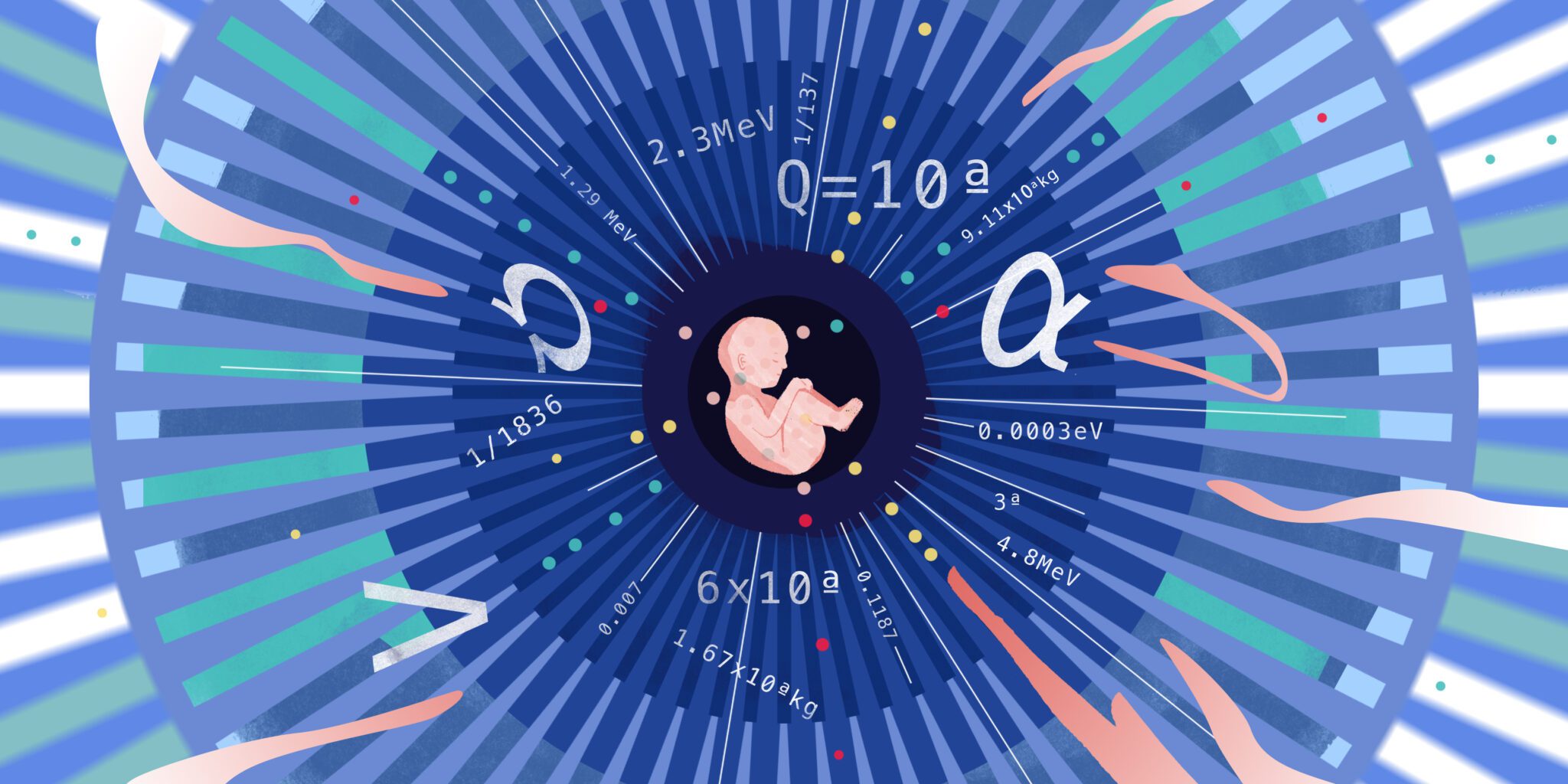
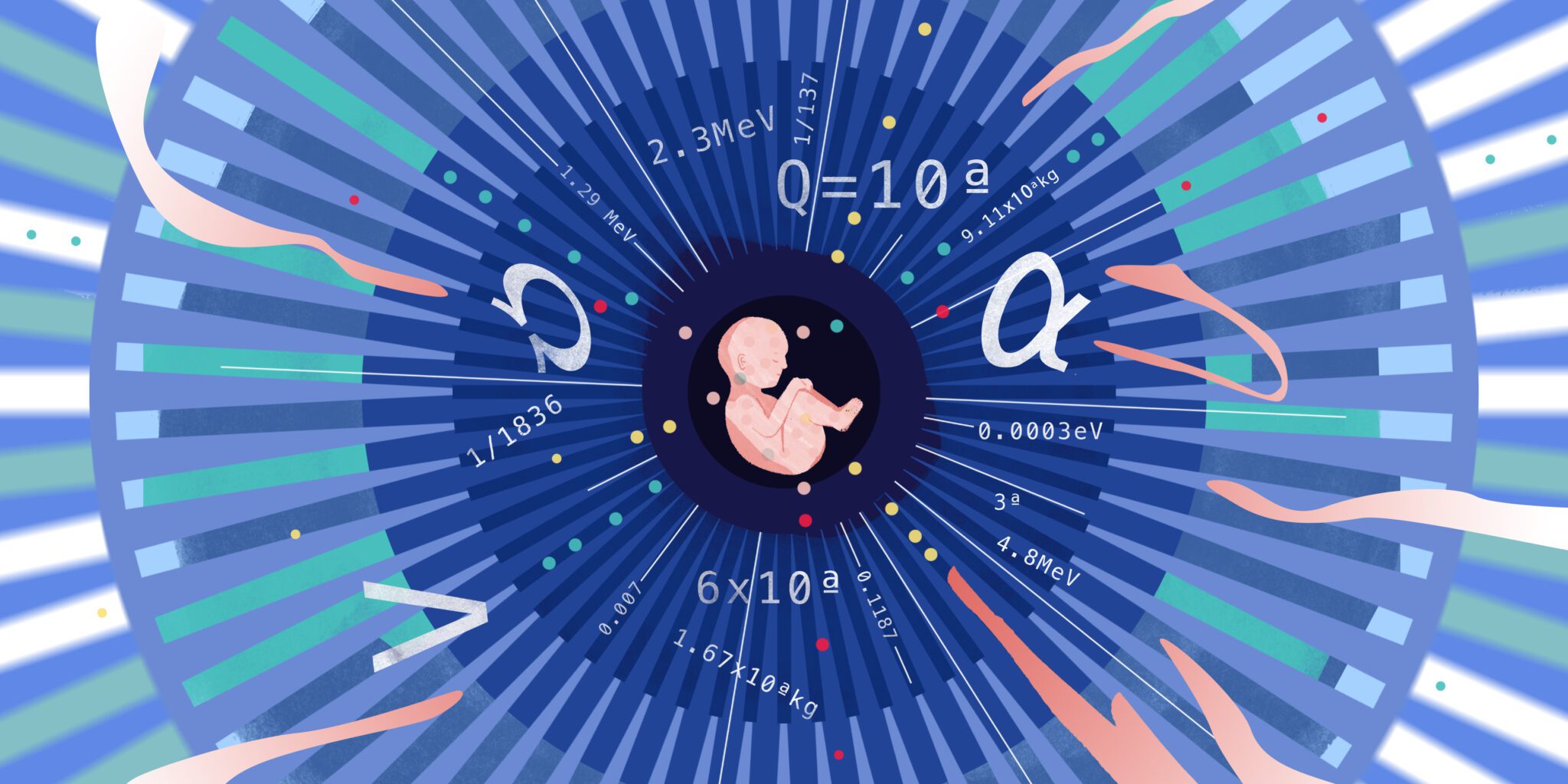
It’s an attractive idea to cosmologists because it dissolves an intriguing puzzle. Namely, the universe appears to be fine-tuned for life from its very inception. You see, many of the fundamental constants in nature are not just any old numbers: they couldn’t be much different from the values they have and for life to still develop.
A Finely-Tuned Universe
For example, take the weights of the proton and neutron, the building blocks inside every atom. They have almost the same masses, but not quite. Put a proton on the scales and it would come in at 1,673 millionths of a trillionth of a kilogram; place a neutron on, and it weighs just ever so slightly more at 1,675. Why the mere one-tenth of one percent difference?
It turns out that the little variation makes all the difference. If things were the other way around, points out Arizona State University physicist Paul Davies, and the proton were slightly heavier, atoms couldn’t exist. No galaxies as we know them, no stars, no planets—and of course, no people. And there are other fundamental numbers in which even minuscule variations would not permit the evolution of life anywhere in the universe.
In fact, astrophysicists call this the finetuning problem, because it is indeed a problem begging explanation: how could such an incredibly precise set of conditions come into existence?
The answer, according to some, is that there must be a vast legion of other universes out there, where the basics of nature, like the proton and neutron mass, vary across them—perhaps even taking on every possible value.
In this multiverse theory, it’s no surprise that we find ourselves in a cosmos which appears to have been tailored for producing life. We simply couldn’t exist in any of the others, where the foundational laws hadn’t all lined up to grant life.
Stanford University physicist Leonard Susskind says it straight, “[It’s] the only explanation that I know. And I think it’s fair to say the only explanation that’s out there.”
Alternatives to Multiverse Theory
But is it? If you restrict yourself to materialist theories, well, maybe. But is it taking materialism too far if it forces you to invent hordes of other unobservable universes to solve a problem in ours? I wonder if, like solipsism, the multiverse theory is a tad distasteful for the same reason—it can’t be empirically verified or falsified.
Alternatively, could dropping the unassailable fidelity to materialism—the belief that the universe consists of nothing other than physical fields, energy, and particles—lead to a more intellectually satisfying solution to the finetuning problem?
The Princeton University titan of physics, John Archibald Wheeler thought so. Rather than materialism, Wheeler adopted something more like dual-aspect monism, says Sydney University philosopher Dean Rickles.
In this philosophy, matter and mind are equally real.
Wheeler came to this conclusion after wrestling with the discoveries of quantum physics. In particular, it was one of the theory’s most brain-bending revelations that forced his hand: that the world out there doesn’t seem to fully exist until it’s observed. Or until it’s measured, to use the term physicists prefer. For instance, particles, which are the building blocks of everything, don’t have a position until they’re pinned down by observation. They are neither here nor there.
The before-measurement world is only kind of there, partially existing, as a vast array of possibilities, but not an actuality. As after it’s observed, the potentialities crystallize into the reality we know.
Twenty Questions
To illustrate this process to his students, Wheeler used to play an altered version of Twenty Questions. The way this game usually goes is that someone in the group thinks of an object, and the others try to guess it by asking up to 20 questions. Wheeler’s version was the same, except the thinker wasn’t to imagine any object at all. Instead, they simply had to answer each question in such a way that it was logically consistent with all the previous answers. The questioning still gradually zeroed in on an object, but one that no one had ever had in mind.
Wheeler believed this was similar to how our observations were creating the world around us, by manifesting, if you like, single actualities from the many potentialities.
“There is no way the world is until you’ve asked a question of the universe, so it knows how to present itself to you,” is how Rickles puts this quantum strangeness. Through the lens of dual-aspect monism, however, this is not so weird, because matter and mind are equally real—each bringing the other into existence.
“Neither mind nor matter is fundamental,” explains Rickles. “There is another thing underneath that is responsible for generating both.” Because that deeper thing is the fount of both, a consistency is not surprising.
The Search for Ultimate Reality
The obvious next question is difficult to answer, admits Rickles: just what is this fundamental source beneath all things? The trouble is that it exists at a level more fundamental than thought itself.
“As soon as you try to observe it, investigate it, you automatically have to bring it into this frame of mind-matter.”
But there may be some avenues of inquiry related to information and mathematics. “It’s neither mental nor material, mathematics,” he points out. The root source of all things may have some sort of structure we could discover—a particular kind of algebra, as mathematicians like to say.” An algebra that would be able to have representations that were physical on the one hand, and mental on the other hand.”
Perhaps Wheeler’s most stunning discovery relating to the finetuning problem was that, not only do minds create the present by selecting from possibilities, they also create the past by the very same process, even the very distant past.
Giving Birth to the Big Bang
Inspired by this interpretation, physicist Paul Davies imagines the far, far future, when intelligence in some form has left Earth and spread through the Milky Way and out into the other galaxies. This now cosmos-wide mega-mind-at-the-end-of-the-universe could act as an observer. It would be able to reach all the way back to the Big Bang itself and select the very laws and numbers of nature that allow the existence of life and mind.
The scenario is like an enormous, self-consistent loop through time—the future is selecting the past, and the past is permitting the future, solving the finetuning problem. “The universe, its laws and its observers all explain each other in a self-consistent package,” elaborates Davies.
Of course, all philosophies are speculative, and assumptions must be made, and they each have their pros and cons. But, as reluctant as most scientists seem to be, opening up possibilities beyond materialism would expand the fertile ground of exploration when it comes to deciphering the mysteries of the universe.
And if relaxing materialism presents us with answers to the finetuning question that are confined to our single, observable universe, that feels much more fulfilling to me.
Graham Phillips is a science journalist with a PhD in astrophysics. He has worked in science television and radio, and he currently teaches at the University of Melbourne in Australia.