

In 1998, a scientist and a philosopher walked into a bar and ordered a drink. It’s not the beginning of a joke, but a consequential encounter between Christof Koch, a young German-American neuroscientist, and David Chalmers, a 32-year-old Australian philosopher. Their meeting would set the stage for the next quarter-century of research and exploration of consciousness.
Koch made a bet: scientists would, within the next 25 years, discover the material basis of consciousness in what he imagined would probably be “a small set of specialized neurons responsible for subjective experience.”
Chalmers had recently presented at a consciousness conference where he divided the study of consciousness into the “easy problem” (explaining how phenomena like learning, memory, perception, and behavior work) and the “hard problem” (to explain how consciousness itself arises—and why we have conscious, subjective experience at all.)
Chalmers thought the solution to the hard problem extended far beyond the specialized neurons Koch pursued. It might require adding an “extra ingredient” to the fundamental components of reality identified by physics—matter, space, energy, and time.
In A World Appears: A Journey into Consciousness, Michael Pollan uses this story to frame the competing perspectives—and open questions—at the heart of consciousness research. Is consciousness completely reducible to brain activity?
Are the tools of third-person, objective science sufficient to explain consciousness?
Do we need to adjust our fundamental beliefs about material reality, subjective experience, and what we can know?
In the years that passed since their initial wager, scientists have made incredible discoveries, developed compelling theories of consciousness, and rigorously tested them in adversarial collaborations like the Templeton World Charity Foundation’s initiative “Accelerating Research on Consciousness.” And yet, despite their best efforts, specific structures responsible for consciousness have not been found.
In 2023, on stage at a public event in New York City, Koch conceded that he had lost the bet, presenting Chalmers with an expensive bottle of Madeira. In his research, Koch has identified an area in the back of the brain’s neocortex, which he has dubbed the “posterior hot zone,” as the likeliest location for neural correlates of consciousness. But over time he began to realize that such an approach would never solve the core mystery—the hard problem—of consciousness:
“Whether you believe in materialism or panpsychism or whatever, we can agree that there are physical mechanisms in the brain that correlate with consciousness,” Koch told Pollan. “But finding those mechanisms is never going to explain how consciousness arises.”
Koch’s journey, from buoyant confidence to chastened uncertainty, mirrors Pollan’s own: “I cannot guarantee that by the end of this book, you will know more about consciousness than you do now,” Pollan writes. “Like me, you may find that you know less than you do now.”
The Limits of Objective Science
Modern science is built on a foundation of binaries. To achieve precise knowledge about the nature of the universe, Galileo confined scientific exploration to the objectively measurable, material world, relegating anything involving subjective, interior experience beyond its purview. Descartes, similarly, divided the world into two distinct categories: matter and mind. But consciousness blurs these neat and tidy delineations.
For those who assume consciousness is purely the result of brain activity, the question remains: how does matter produce minds? From electrical impulses and firing synapses, how do we end up with subjective experience, a sense of self, and the awareness of our own awareness?
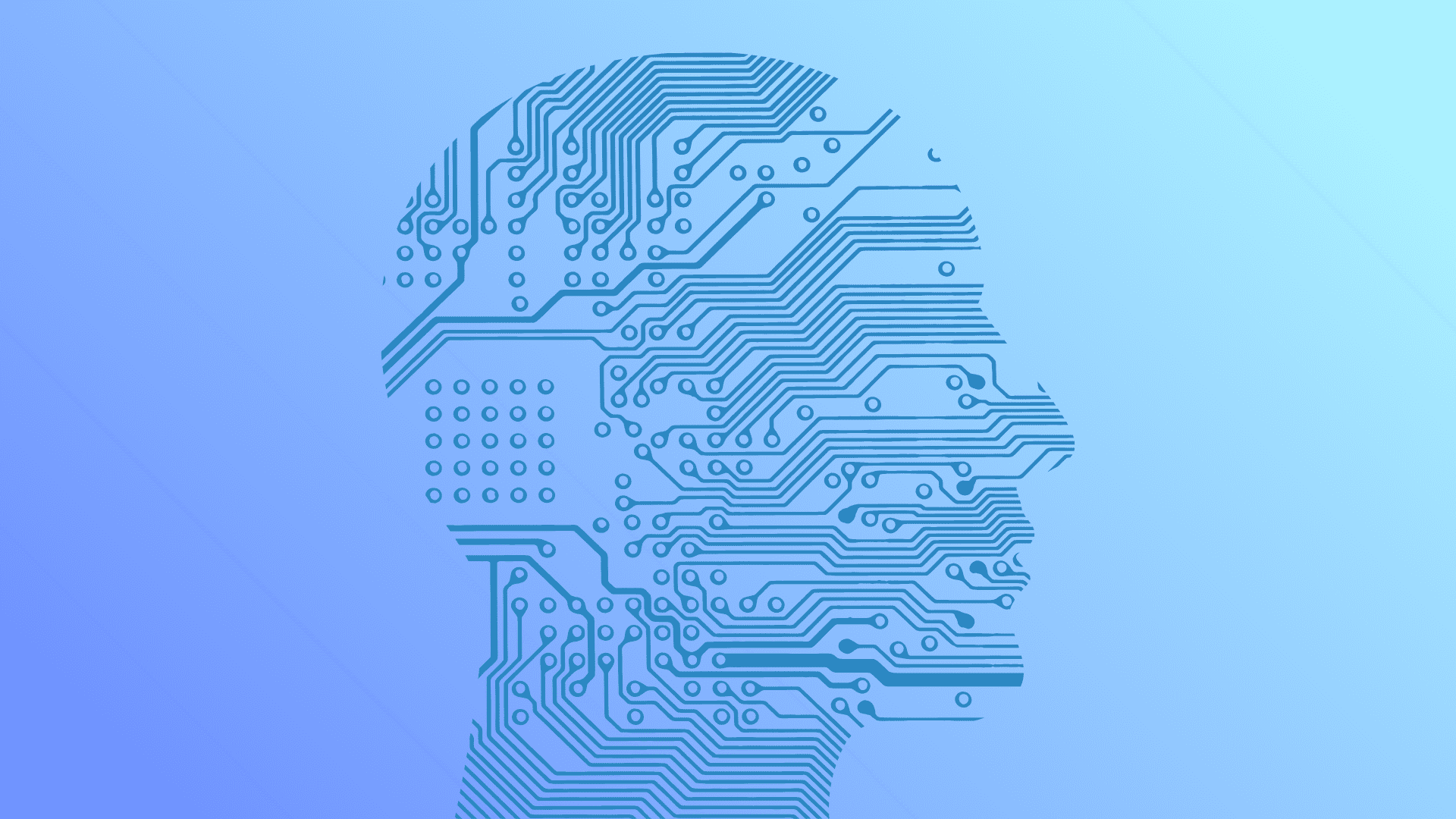
The leading brain-based theories of consciousness see it as a computational operation conducted by the brain. Pollan links these theories with the rise of the brain-as-computer metaphor that emerged in the 1940s: “This is the reductive faith of our time,” Pollan writes, “the belief that the brain is essentially a computer and that conscious awareness emerges, somehow, from the processing of information.” That “somehow” is doing a lot of work, Pollan says, functioning as an “abracadabra.”
But scientists, philosophers, and researchers across disciplines have wildly varying perspectives on consciousness. Some see consciousness as an embodied biological trait, not an algorithm that can be reproduced on microchips. In an interview with Templeton Ideas, the British neuroscientist Anil Seth said, “I think it’s more likely that consciousness is a property of life, of our nature as living creatures, than that it’s a property of computation.”
Some, like Koch, argue that consciousness might not depend on a brain at all, but can instead emerge from complex, interrelated systems, leading us to wonder whether certain forms of AI might attain consciousness.
Others think consciousness is not something that is produced at all, but that has existed all along and is received, like an antenna picking up a radio signal.
Plant neurobiologists (a paradoxical title, as plants do not have neurons) argue that plants are, if not conscious, then at least sentient: their research shows that plants can learn and form memories; distinguish between competitors, plants of the same species, and themselves; predict changes in the environment and respond accordingly; send and receive signals from other plants, and more. Plant consciousness, these scientists argue, just looks different. Our long-held beliefs (that consciousness comes from the brain, that only humans or at least creatures like mammals that are closely related to us have consciousness) and our own limited subjective experience blind us to a consciousness that doesn’t resemble our own.
Descartes’ belief that humans were the only conscious organisms on earth led him to vivisect living rabbits and dogs, excusing their screams as mechanical and automatic, rather than expressions of pain and suffering. Pollan cites Descartes as a cautionary tale about the danger of getting so attached to a belief that it blinds you to direct experience and intuition.
Pollan asks,
“What would it look like, a science that took experience seriously, or that was willing to venture beyond materialism—the metaphysical belief that everything, including our mental states, can be explained in terms of matter?”
Expanding Boundaries of Consciousness
Pollan’s own perspective of consciousness was dramatically changed by personal experience: tripping on mushrooms in his garden, surrounded by plants, where he perceived “a world steeped in mind.” He was suddenly certain that the plants around him were sentient. His experience was not unique: researchers at Johns Hopkins have found that “a single psychedelic experience dramatically increases the likelihood that a person will attribute consciousness to other entities, both living and nonliving.”
Pollan wonders whether users of psychedelics are experiencing purely magical thinking, or whether they are “relearning” something fundamental about the world that we have forgotten. As for Koch, the neuroscientist who lost the bet against Chalmers, his own perspective on consciousness also changed radically after experiences with psychedelics. During an ayahuasca ceremony in Brazil, Koch experienced “Mind at Large,” a term he borrowed from Aldous Huxley’s description of a boundless, expansive consciousness, freed of the “reducing valve” of everyday perception. The Mind at Large apprehends the interconnected nature of the universe or the divine. It is, as Koch described his experience, a transcendence of self; an encounter with the sublime.
A later experience with 5-MeO-DMT imparted to Koch a sense of “the survival of subjectivity in the face of ego death,” which freed him from obsessive thoughts about mortality. These experiences led him to “question the metaphysical worldview [he] had grown comfortable with.”
Koch’s 2024 book, Then I am Myself the World: What Consciousness is and How to Expand It, reflects on transformative experiences—religious, psychedelic-induced, and near-death—and what they reveal about consciousness:
“Transformative experiences serve as a powerful reminder of the miracle of existence,” Koch writes, “of the fundamental mystery of why there should be something rather than nothing.”
These words—miracle, mystery—typically don’t show up in scientific texts, but appear with some frequency in writing about consciousness. In his interview with Templeton Ideas, Anil Seth referred to consciousness as a miracle. And while Pollan is wary of veering into mysticism, he also begins and ends his book by describing consciousness as a miracle.
Other Ways of Knowing
One of the pleasures of work by people who spend a lot of time thinking about consciousness is that they search for ways of expressing aspects of subjective experience for which scientific language falls short. The longer Pollan spent studying consciousness, the more he felt that science represented only one way of knowing:
“Literature, philosophy, and religion have been thinking longer and harder about consciousness than the sciences have,” Pollan writes, “and I discovered that they have at least as much light to shed on the phenomenon.”
In his essay titled, “The Tune of Things: Is Consciousness God?” the poet Christian Wiman writes about quantum entanglement, “If reality is this fluid, and if the mind communes with matter in ways we don’t understand, maybe miracles aren’t miracles. Intellect simply hasn’t caught up with—or recovered—intuition.”
If Koch’s and Pollan’s perspectives on consciousness have been shaped by the transformative experience of psychedelic drugs, Wiman’s has been shaped by transformative experiences of his own: living with a rare, incurable cancer; a conversion from atheism to Christianity (in his words: “I assented to the faith that was latent within me”); and a deep, lifelong immersion into poetry.
Wiman intuits that consciousness might exist independent of the mind, as a property of the universe in which all living beings participate: consciousness as something we share, rather than something we individually have. (Something, he seems to suggest, that some of us might have come to call God.)
Maybe this is what the words like “miracle” and “mystery” gesture toward—that which would otherwise be unsayable—or, as the writer Samuel Matlack proposes, would be best apprehended by “either poetry or silent awe.”
More Awe, More Wonder
Koch describes himself as a lapsed Catholic, but in his recent interview with Templeton Ideas, his perspective on artificial intelligence echoed the Pope’s. Koch warned that in capitalist societies that reward productivity, we value algorithms and bots for their ability to work, placing a higher value on intelligence and a lower value on consciousness:
“To the extent that we value LLMs and agentic AI more and more,” Koch said, “we’re going to de-emphasize what’s really unique about us, which is the fact that we can love.”
In Pope Leo’s new encyclical on AI, Magnifica Humanitas, he warns of the dehumanization of our increasingly technocratic world. “No computational system, however sophisticated, can create a heart that gives itself, or a conscience that discerns good from evil.”
By the end of Pollan’s book, an inner voice was telling him that he was “using the wrong kind of mind.” He moved into a cave without plumbing or electricity in the mountains near Sante Fe, under the guidance of the Zen Buddhist teacher Joan Halifax. He’d spent enough time thinking about consciousness: “The more I strove to penetrate the mystery, focusing the increasingly narrow beam of my attention on what consciousness is and what it does and how it came to be, the less of it I was actually experiencing–whatever it was.”
Science might be one way of knowing, but Pollan concluded with “not-knowing.” His deep dive into consciousness transformed his quest from solving a mystery to simply experiencing it. Where has that left him? “More awe,” he said, “more wonder in the face of mystery.”
Martha Park is a writer and illustrator from Memphis, Tennessee. She is the author of World Without End: Essays on Apocalypse and After.