

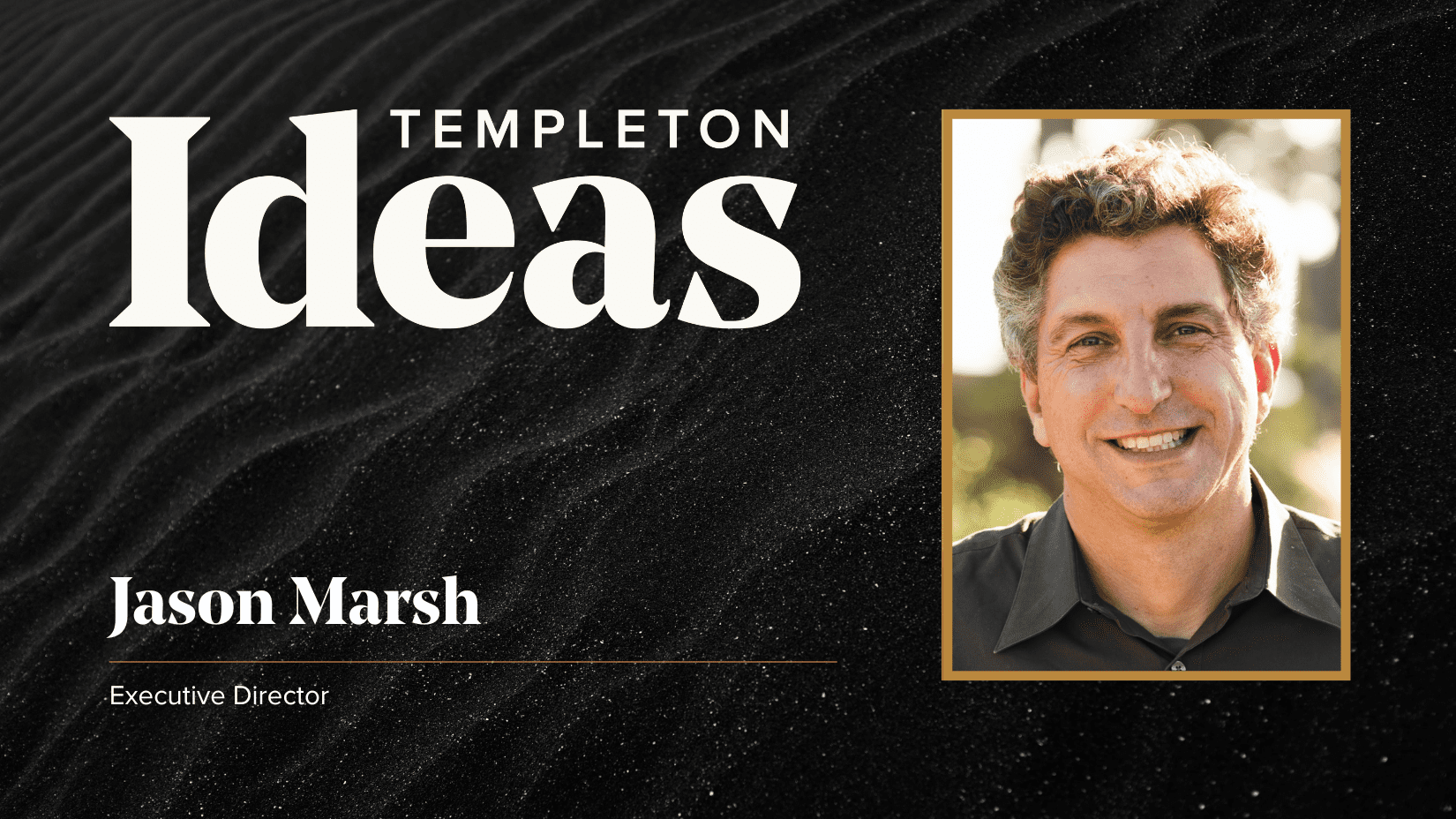
Jason Marsh is the executive director of the Greater Good Science Center at UC-Berkeley. Greater Good is committed to sharing science-based insights with educators, parents, and other professionals to foster meaningful lives and a thriving society. In recent years, Greater Good has received grants from the John Templeton Foundation to engage and promote virtues such as intellectual humility and love.
At their best, holidays fill us with hope, wonder, generosity, love, and joy. But what is joy, really, and can we experience it even when life is turbulent and tough going? To learn more, check out Alene Dawson’s Templeton Ideas essay Unwrapping the Science of Joy.
Transcripts of our episodes are made available as soon as possible. They are not fully edited for grammar or spelling.
Ben: Jason, welcome to the podcast.
Jason: Thanks for having me, Ben.
Ben: I’m curious to hear your origin story for getting into science communications.
You’ve been at the Greater Good Science Center for over 20 years. When did you first realize you wanted to pursue science communications or journalism in general?
Jason: Journalism in general for as long as I can remember. I worked on my high school newspaper, college newspaper. I was pretty set on doing something related to journalism, doing some kind of editorial work, but was also really interested in big ideas and in education as well, and had been trying to figure out how to combine all of those interests.
Ben: The John Templeton Foundation has been funding the Greater Good Science Center for a long time, and from my perspective, it has become one of the leading, if not the preeminent science communication platforms for social sciences in the country.
Can you tell us what the GGSC of today is in terms of reach and how big the organization is? Paint a picture of the journey from the pitch you gave two decades ago to where it is today.
Jason: We’ve evolved a lot from the print magazine days. As a print magazine we peaked with 5,000 subscribers, distribution of around 10,000.
Our staff at the time of two and a half. Greater Good now has about a half million readers a month for the online magazine, and then several hundred thousand listeners of our podcast each month. Then over time we’ve run online courses, so a much bigger ecosystem. Still, obviously the mission hasn’t changed all that much from the print magazine days, but the ways that we do that much more varied,
So we have Greater Good, the online magazine, another website called Greater Good in Action, that just takes the key practices and techniques that have emerged from the research things you can do tomorrow to build skills like gratitude, forgiveness, a lot of key character virtues we think are really important to leading a meaningful life.
And then there’s a companion website called Greater Good in Education. Similarly practical material, but just geared toward educators, teachers, school leaders, folks working in the classroom, and schools and district-wide as well. And then of course we have our Science of Happiness podcast videos that we also publish and distribute through our YouTube channel and host on greater good as well.
And then over the last especially five to 10 years, we have been doing more and more work to take that content and help people apply it to their professional lives as well as their personal lives with a particular focus on educators and health professionals as well. And then more recently, in the last six or seven years of program on bridging differences, taking research that really zeros down on how people get along across differences, lessons from the research that can help foster positive dialogue, relationships, and understanding across lines of difference at a time of deep polarization and division.
Ben: Let’s step back now and discuss the core of what the Greater Good Science Center does. Could you share some principles of reading and consuming research for people who try to navigate this on their own?
Jason: Yeah. For starters, I should say, we are tracking research that is already published in peer review journals, and then sometimes a lot of our work really starts with a question that readers are coming to us with that we can notice even in search patterns on our website that are big individual questions.
Big cultural questions. How do I raise compassionate kids? How do I practice forgiveness? When should I forgive someone who’s wronged me? And then for those pieces, we’ll start with a question and then dig back into the research to say, what is, how does the science help us answer that question? And look for credible studies that provide seminal findings and that helps speak to broader trends that go beyond just any one single finding.
Ben: What do you think makes science communication different for media in general?
Jason: It’s obviously a very broad category and term, I think for. Some readers, it helps to satisfy a certain intellectual curiosity about the way the world works, the way the physical world works, the way the human brain works, origins of human behavior.
But a lot of our work really draws on science in order to suggest to people what is working, what are evidence-based strategies for promoting learning in schools, for raising kids of character who have more of a pro-social as opposed to anti-social orientation to the world, and what truly leads to happiness and meaning in life.
There are a lot of purveyors of ideas and recommendations for how to achieve all of those outcomes. Many of them not based on research, not based on evidence. And so I think for us, there’s a lot of great storytelling, a lot of great ideas, a lot of compelling thinkers out there. We try to offer is a scientific voice in these bigger conversations to these big questions.
Ben: For the last 20 years, you’ve been leading an organization that synthesizes vast amounts of knowledge into practical wisdom and tips. So what are your top three recommendations based on everything you’ve encountered?
Jason: One of the main takeaways from all this research on wellbeing, on living a meaningful life, social connections matter, right? Probably first and foremost, full stop. Both close strong ties and what’s sometimes called weak ties, right? Just having a loose network of affiliations, acquaintances that matters as well.
Really having a sense of place and belonging and seeing yourself as a social animal, as part of a social community is key by so many measures, right? For both physical health, life satisfaction, psychological wellbeing, social connections are not the only factor, and don’t guarantee that you will live a happy and meaningful life, but they seem to be necessary, and I think that is something we all know, maybe intuitively, but it’s easy to gloss over it and undervalue and maybe, and invest less time in our relationships and take it for granted.
But it’s worth looking back, even in terms of life expectancy, in terms of you’re less likely to die or die young if you maintain strong social connections for a variety of reasons, both because it perhaps contributes to psychological health and also very practically if you have more people looking after your health and checking in on you, especially as you age.
Ben: Instead of home economics classes like we used to have. Do you think there should be social skills classes for kids these days?
Jason: Yes. Fundamentally that is just a lot of what we do. Like the skills that we offer are those that really help you build and maintain relationships. Thinking about gratitude, forgiveness, compassion and empathy, all skills that are essential to maintaining strong, successful relationships over time.
One of the other big findings is there’s one line of thought about humans to say humans are fundamentally bad and evil and aggressive, and we need to purge ourselves with those behaviors through culture. There’s another line of thought that’s humans are fundamentally good and maybe corrupted by society or circumstance, and what I think is the clear lesson from science is that we have the propensity for both.
Compassion as well as for hostile and self-interested and aggressive behavior. And what really matters are the environments that we create, the social circumstance that can elicit either our propensity for goodness or more antisocial Behavior. So the onus is really more on us to figure out what are the environments and the culture we wanna create to have us express more of the positive stuff.
And gosh, for a third, one of the great determinants of pro-social behavior along these lines is social equality, is that actually power imbalances in our society have real detrimental effects for people on both ends of the spectrum. This has been really interesting to see emerge from the research is that there’s a good amount of science suggesting the stress that people suffer from when they have a lower socioeconomic status, lower on the social totem pole.
There’s also interesting research on the impact of power and elevated status on people’s psyche and wellbeing as well. And when it comes to engaging with other people and forming strong social connections and behaving with compassion and generosity and empathy, there seems to be real detrimental effects of feeling like you are of great elevated status.
Power imbalances are inevitable and, fact of society, but there’s research suggesting when those imbalances grow to such a great extent that people feel like they’re living in entirely different worlds. Their sense of self is corrupted in a way where they have a lower likelihood of not only being able to connect with people who they think are not like themselves, but even people in their own social circles.
So it’s been interesting as well in terms of social circumstances that can really have an impact on self-perception as well as one’s relationships. Living in a more society seems to have a real impact on our ability to connect with others and therefore on our ability to enjoy happiness and meeting in life.
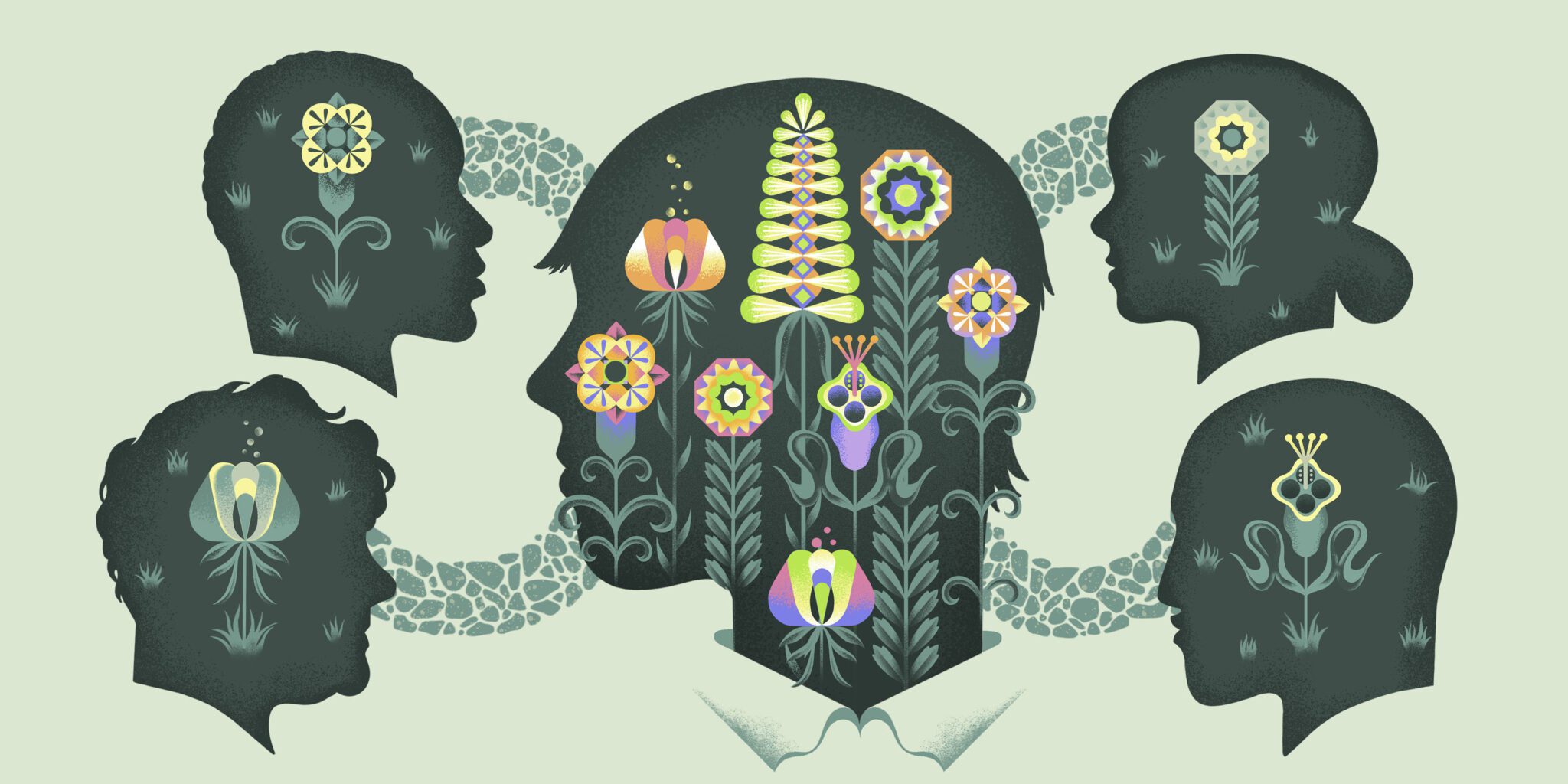
Ben: So you’ve been working on an intellectual Humility project funded by the John Templeton Foundation. And it was highly successful in educating more people about open-mindedness and the virtues of being humble about their beliefs. How did this project elevate the concept of intellectual humility in broader discourse?
Jason: So we had two big events. We brought together various project stakeholders, people involved in the project, people we gave grants to researchers and intellectual humility. And for that first event, we asked people, what is one issue on which you’ve changed your mind? And we got, there were I think 75 people who attended.
We got 75 different answers. Fascinating range, and I was really impressed at people’s openness to sharing, but then also just the wide range of topics in which they had changed their mind. And I really had to consider whether I myself was as open to changing my mind and admitting mistakes or things I might have been wrong handed about at one time.
And I think my answer was like probably not as much as I would like to think, I think I would like to think of myself as a pretty intellectually humble person, but I think I could probably do better.
Ben: What does it look like to be better at practicing intellectual humility?
Jason: So I think one of the main takeaways for me was it doesn’t mean you change your mind actually, and it doesn’t mean that you agree with people.
It means you are not as quick to discount their view and attribute it to some poor judgment or breakdown in logic, but really grapple with the possibility that they may have a point and not be as quick to invalidate it, and also to feel less defensive and threatened by ideas that challenge your own.
I tried to become more attentive to just the rush of adrenaline that I think I and maybe others experience as well when you encounter a viewpoint that’s different, that’s perhaps threatening to your own worldview and you immediately kind of marshal your intellectual and emotional resources to launch your counter argument. Notice that physiological sensation and take a step back and say, I’m just gonna listen before I actually try to respond.
Which can be easier said than done, but I think just having that awareness and a little bit of extra motivation to do that was key. And I would say I do not do that a hundred percent of the time, but I think I do that at least 10 to 20% more than I used to, which is a start.
Ben: And are there any benefits to intellectual humility?
Jason: This is still an emerging area of research, but we definitely can break down the benefits into a few categories. For one, just personally, it helps you get closer to the truth, right? And there may be more to the truth, a reality than what you may have just initially assumed. So if you care about being accurate and actually having a good understanding of the world, being open to other perspectives, taking in new information with an open mind and a relative lack of at least harsh judgment will help you be better informed, have a better understanding of the world.
Secondly, in terms of relationships, there are some evidence that people who practice intellectual humility are more successful in their even more intimate relationships. And then also for people in leadership positions, whether in business, faith leaders as well, political leaders, there’s evidence that people who actually demonstrate more intellectual humility are more willing to admit when they don’t know the answer are actually better respected by their followers, by others.
I think there’s often the assumption that in order to be a leader, you need to project total confidence. And in fact the opposite seems to be true. There’s actually real benefit of admitting that you don’t know sometimes and being open-minded and humble. And then I think there are broader societal benefits to embodying and practicing intellectual humility in terms of reducing polarization and culture wars, various kinds of social division. I think feeling a little bit less like you know it all, or that your side has all the answers.
Our interest is just taking down the temperature, a little bit of cultural conversation and encouraging a little bit more open-minded dialogue, civil dialogue, even constructive dialogue between groups and individuals so that public debate is less acrimonious, and I think demonstrating intellectual humility would go a long way toward achieving that goal.
Ben: You mentioned that one part of what the Greater Good Science Center does is to counteract or correct myths about wellbeing. So what are some of those myths and which ones do you think are the most common or detrimental?
Jason: Obviously there are a lot of myths around what are the most reliable pathways to happiness in life, and we all know that just the accumulation of material possessions and professional success, we think we know that. And yet. that is still how we spend a lot of our time and a lot of our money.
Jason: And so for us it is really trying to marshal more of an argument and more evidence suggesting why that path is so foolish and misguided to suggest both the downsides of going down that path and the benefits of the alternative, and really what the alternative looks like and why it matters for personal, physical, and mental health as well as for our relationships and greater sense of meaning and purpose in life.
I think another big myth is that related to happiness and related to satisfaction and social harmony, is that people are happier when they are with people like themselves. People who. Look like me, think like me, like attracts like, and that is a pathway to social harmony as well to various degrees. And I think that idea isn’t entirely wrong or misguided, but who we see as being like us is highly malleable and highly dependent on circumstance in a host of external factors.
That actually, if we can encourage, create social conditions and create psychological cues that help people see others who they may think as being different from themselves, as being more like themselves, their attitude toward them completely changes. We see that even on a level of brain activity as well, and that if you can help people see their relationship to others or even the other with a capital O differently you actually temper that response, people feel less stressed, broaden their network of social connections, and really expand their definition of who they see as being like them, who’s part of their group, which has great benefits for both individual health and wellbeing, and also for social health as well.
So that’s another big kind of misconception about what it means to be with people like you or to be among people like you and the benefits of that.
Ben: During your years of research and the efforts you’ve made to help people live better lives, what surprising results have you encountered? I’m thinking if you could share something that might have conflicted with your initial assumptions about wellbeing.
Jason: I think for one, there is the benefits of social connection extending even to people who would consider themselves introverts, right?
Some people seem to gravitate more toward others, and not everyone needs necessarily the same amount of social connection. There isn’t, an absolute figure or threshold that we all need to meet, but there is some evidence it’s not zero, and there is some evidence that even those who might be a little bit more reluctant to engage socially still reap real psychological benefits from doing so.
And so it does provide a little bit added incentive motivation, even for the introverts to get a little bit beyond their comfort zone and enjoy some benefits as a result.
Ben: Now, regarding the audience, you do events, you do conversations, and you publish a huge amount of content on virtues and living well.
What do you find resonates most with people today, and how has this changed over time?
Jason: We have focused really heavily on the science of gratitude, and I think that has been perhaps the topic more than almost any other, that seems really to have resonated with people and struck a chord. And it’s really at the intersection of all of the themes and outcomes that I think we care about and focus on at GGSC.
Researchers have referred to it as a social glue way of actually strengthening relationships and also a way to help people actually appreciate their own lives: be grateful, not even just to an individual, but to God for those of a spiritual or just.
Divine providence, even if not, located in a specific deity, but also just to take more time to recognize and appreciate one’s good fortune and goodness in one’s own life as originating beyond just the self. I think that mindset contributing to a deeper sense of happiness and contentment in life at the same time that it helps to foster stronger relationships as people actually recognize the good that others do for them, which in turn helps those people who receive gratitude to then in turn feel better about the relationship with the person who expressed gratitude.
So having those real social benefits as well as psychological benefits and that perhaps more than any other virtue or skill that we’ve covered really has struck a chord. I think also because it is really countercultural, I think in the U.S. especially, that really prizes and emphasizes self-reliance, rugged individualism.
Jason: I think there’s a certain implicit assumption that the goodness in our lives, our successes, achievements, any bounty we’ve received is because of our own individual effort and achievement and skill. And I think it takes real effort to recognize that some of, at least some of what we have achieved and the goods we’ve enjoyed are because of forces outside of our control.
And I think similarly, another area of research that we have covered I think really from the time that research really started to take off in this area is around self-compassion. Also somewhat counterintuitive or countercultural in that there’s a belief that we get ahead by being really hard on ourselves.
And that’s the way to achievement, that’s a path to success is being unrelenting and always pushing yourself to go harder, do better, and instead, research on self-compassion has found that treating yourself with some degree of understanding and recognizing that your own shortcomings, even failures, stakes, are something that binds yourself to the rest of humanity.
And then responding with a certain degree of kindness and understanding and even forgiveness toward yourself actually is a path to doing better, to improvement in the future and that being overly harsh on yourself is gonna serve as a deterrent for people who will just avoid situations or experiences where they’re going to fail and where they’re gonna induce that kind of self-incrimination.
Ben: What has been the most viral piece of content in the history of the Greater Good Science Centers, various platforms and publications.
Jason: There is a piece that we published on how gratitude changes you and your brain that is perennially one of the most popular pieces on greater good. And I think it is largely because it suggests that gratitude is real. The benefits of gratitude are real, and they actually are evident even on a neuroscientific level.
And I think that feels really validating. That’s a big one. Also, a piece we published years ago on Habits of Em, highly empathic. That was a way that people can both understand how other people show up for them and what it looks like to receive empathy, and then also people to gauge how empathic they really are themselves.
I think everyone likes to believe, most people like to believe they are empathic, so it’s a way of having a little bit of a reality check perhaps based on actual research. And similarly, we published more than a decade ago, we call it emotional intelligence quiz, it’s basically a facial expression quiz to ask people to identify the emotions expressed by different facial expressions, they take their best guess, and then we break down the facial muscles actually implicated in different motion expressions, which has remained one of the most popular pieces of content.
Ben: The Intellectual Humility Project funded by JTF has changed the cultural conversation in significant ways. You’re now at the early stages of a grant that’s focused on love, which poses unique and special challenges. How do you plan to track the project’s progress, and what do you think success in this case might look like if you achieve another breakthrough?
Jason: We are trying to expand people’s understanding of the term to get beyond just romantic love, and to think about love fundamentally being about deep care and concern for other people’s welfare beyond your own immediate benefit. It means encompassing, but also getting beyond familial love as well, to encompass compassionate love, altruistic love as well.
Basically, having an unselfish care and concern for the wellbeing of others. Loving your neighbor. Love of all of humanity. Even going so far as loving your enemy and people you may think you’re at odds with still finding this kernel of deep care and concern for them as well. I think especially at a time right now when people are grappling for the right language, that is the opposite of the kind of division and polarization that we see in our culture, in our politics.
We talk a lot about hate talk, a lot about hate, and it’s hard sometimes to come up with what’s the alternative of division and polarization. Is it agreement? Is it unity? Like none of that seems quite right or seems quite possible. So we are betting to a certain extent that the language of love might have more currency and impact.
It doesn’t necessarily mean that you agree. With people who don’t share your political views, but you can at least treat them with the kind of respect and recognition of common humanity that we think is basically a form of love and really expanding your sense of who’s worthy of your love.
Ben: Finally, could you leave our audience with a daily habit, a practice, some behavior from the research that you’ve read that has made a difference in your life? Could be small, could be large, but what has most impacted you personally?
Jason: So it’s no coincidence that I mentioned gratitude and self-compassion before.
Gratitude is one. I have definitely tried to adopt. Self-compassion is one that has been especially hard for me. Really getting down on myself. Beating myself up. So to speak about making a mistake and feeling like that mistake should have been, could have been avoided. And I think being able to take a step back and recognize, not just everybody makes mistakes, but I am not perfect. And I’m going to make mistakes like everybody else. And having some degree of acceptance of that fact and having that be a sign, not that I’m worth any less, but just that I’m human and that what is more important is how I respond to those mistakes.
How I learn from them, how I build on them, how I move past them, more important than whether I can avoid them altogether. Sounds really simple, but I really feel like it enables me to show up, be more present for colleagues, especially for my family, be able to respond to challenges like that with a little bit more grace and acceptance.
So yes, that has been a really big learning process for myself, but a big, hopefully area of growth too.