


Focusing on what truly deserves our attention, rather than mindlessly succumbing to the allure of glowing screens, is a challenge worth pursuing. But if we want to learn more, grow more, and understand more, we won’t stop there—we’ll also take time to reflect on our lives.
Education expert Rebecca Winthrop describes attention as “the entry point, the doorway that gets you through,” but says that what a lot of people are struggling with today is actually “reflection and meaning-making.”
It’s not just about what can be gained from introspection—
from asking ourselves questions, challenging assumptions, seeking understanding—it’s about what we risk if we avoid it.
I think of Elena Ferrante’s observation that to “tolerate existence” we lie, “above all to ourselves.”
“Falsehoods protect us, mitigate suffering, allow us to avoid the terrifying moment of serious reflection, they dilute the horrors of our time, they even save us from ourselves,” Ferrante writes.
If it’s true that we use falsehoods to protect us from harsh realities, it makes sense that serious reflection could prove terrifying. But isn’t there something equally, if not more frightening, about failing to seriously reflect? About perpetually, unconsciously, habitually, deceiving ourselves?
Reflecting on Untimely Questions
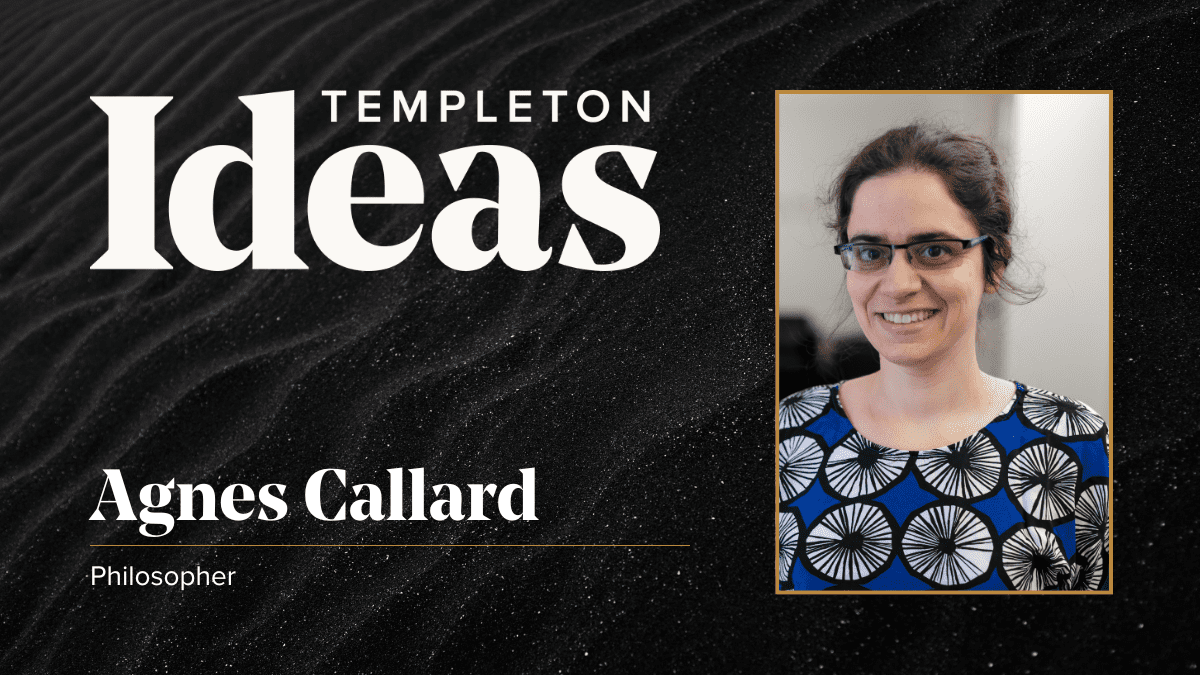
Philosopher Agnes Callard describes the self-deceptions Ferrante lists as “the strategies that we ordinarily use to get through our lives,” and says great literature can help to make life’s high-stakes questions—those Callard calls “untimely”—askable.
She’s talking about questions with answers that might demand a sacrifice we don’t want or know quite how to make, or tell us something we don’t want to hear; they are questions we always have reason to put off. Through literature, Callard says, we can explore “what we otherwise look away from…the great questions about the meaning of marriage, of friendship, of career, of politics, of suffering—and, yes, also of life and death.”
We need to keep reading, we need to keep discussing, thinking, reflecting, to make sure we retain the attention spans, the muscles required. But while reading fiction rewards attention and can prompt reflection, Callard says it has a “serious limitation.”
We can ask high-stakes questions in relation to fictional characters, approaching their lives with boldness, but fail to turn our gaze back on ourselves. We can “come back to reality, and to the course of our own lives” and keep lying to ourselves, rather than taking the next step: looking through the lens of our own lives, our own characters. Consider how easy it is to see a fictional character’s flaws and condemn their actions, while presuming to know better ourselves.
Spiritual Reflection
A few years ago, a friend asked for feedback on an essay he’d written. It was about the value of reflection in the context of his role as the pastor of a church.
The friend, Daniel Shepheard, had adopted a practice of “internal ministry reflection.” Three evenings a week, he followed a formula set out by Spanish priest and theologian St Ignatius Loyola in the 1500s:
- Become aware of God’s presence.
- Review the day with gratitude.
- Pay attention to your emotions.
- Choose one feature of the day and pray from it.
- Look toward tomorrow.
“This ‘method’ has a few benefits,” he wrote. “First, it is short and achievable for the end of the day. Second, it trains the heart and mind to review, name emotions, and give attention to daily situations and occurrences. We are often too quick to move on. Finally, it is prayerful and seeks to draw us near to God at the end of the day he’s given us.”
Shepheard also noted that internal reflection carries a risk of self-deception and avoidance.
“To counter this, an awareness of the risk and a commitment to the task of growing is important. Also important is a pledge of honesty and humility,” he wrote.
Reflection carries a risk of self-deception and avoidance, it’s true. We can focus on what’s trivial, what’s safe, or on other people’s failings, not our own. We can deceive ourselves in any number of ways. But failing to reflect, whether deliberately or unthinkingly, being “too quick to move on,” makes self-deception and avoidance even more likely.
Reflection Towards Personal Growth
I was reminded of my friend’s reflective practice when I came across a book geared towards helping leaders increase their emotional intelligence at work.
In The Emotional Intelligence Advantage: Mastering change and difficult conversations, Amy Jacobson describes reflection as the “ultimate” opportunity for growth, and she shares five questions she likes to ask herself.
- What went well?
- What didn’t go so well?
- What will I do better next time?
- What actions will I take to rectify the situation based on the role I played in what didn’t go well?
- What do other people need from me now to achieve a good outcome?
“Reflection is our number one opportunity for growth and development yet it is frequently overlooked as we search for brand new learning opportunities,” Jacobson writes.
She recommends people take time to reflect at least weekly, if not daily. A leader might reflect on a difficult conversation, or simply ask themselves, “How emotionally intelligent was I today/this week?” and “What can I do to improve this tomorrow/next week?”
The questions this author regularly asks herself, and the questions my friend regularly asks himself, might not lead to the kind of “terrifying moment” Ferrante speaks of—but they could.
Either way, they might lead to some uncomfortable answers, especially if we pledge to be honest, especially if we ask for divine help. Attending to, and trying to understand, our emotions—such as guilt or anxiety—or our actions—such as why we overreacted to one person’s passing comment, or treated another person with disrespect, or want another person’s approval so desperately—might force us to confront shameful ulterior motives and deep insecurities that lead to deeper questions. Reflection might help us catch our lies and prompt us to seek the truth.
As noted above, Socratic dialogue can also aid reflection. In fact, Callard’s comments above are taken from her book Open Socrates: The Case for a Philosophical Life, which is all about such dialogues.
Callard says “inquiring together” is a way to discover the blind spots we’re prone to when thinking alone. She doesn’t say we shouldn’t also think and reflect alone; she does say we shouldn’t only think and reflect alone.
Books That Spur Deep Reflection
Winthrop speaks of the value of reading and reflecting on “full” books. Book clubs strike me as an invaluable opportunity to read and reflect, individually and with others. I belong to two.
One meets every two months to discuss a different book each time, the other meets weekly and discusses the same book, week in and week out. In the former, there’s always the safe option of discussing only the book, and not our lives, though often we do both. In the latter, we’re more vulnerable by virtue of the book itself—a compilation that tells one cohesive story. The members of this group view what they are reading as sacred, “God breathed.”
“For the word of God is alive and active. Sharper than any double-edged sword, it penetrates even to dividing soul and spirit, joints and marrow; it judges the thoughts and attitudes of the heart,” says the author of the Letter to the Hebrews. Disciples meet to study this “word;” from its historical accounts and prophecies, to its songs and poems, proverbs, letters, and biographies, because they trust that it can shape their thoughts, and lives, and characters.
“The inquiry into untimely questions is the search for a life that doesn’t need to be shielded from reflection, a life you live by understanding it,” Callard says.
And this book, more than any book I know, has a way of asking untimely questions and demanding deep inner reflection.
Awake, Sleeper
Paying attention to what others think and say, and to our own thoughts and experiences—reflecting on our days, and weeks, alone and with others, with structure and without—won’t always be comfortable, and sometimes it will be downright frightening. But resisting the examined life, resisting change, resisting truth—that terrifies me more.
“A moderately bad man knows he is not very good: a thoroughly bad man thinks he is all right,” C.S. Lewis writes in Mere Christianity. “This is common sense, really. You understand sleep when you are awake, not when you are sleeping. You can see mistakes in arithmetic when your mind is working properly: while you are making them, you cannot see them.”
Reflecting can show us we’re not as good as we’d like to believe. And it can show us we don’t have to be. The truth can terrify, but it can also lead to hope. Lewis saw this, too. He said that if we look for comfort, we won’t get either comfort or truth, “only soft soap and wishful thinking to begin, and in the end, despair.” But if we look for truth, we may find comfort in the end. Especially if we don’t just read books, but let those books read us.