



Social Scientist Arthur C. Brooks, author of an entire book on happiness, came to a new understanding of it after an encounter with a manifestly unhappy person on a cross-country flight. Seated in front of an elderly couple, Brooks overheard the woman’s attempts to console the man as he complained that his life wasn’t worth living, and that he was unloved and un-remembered. It was only as the couple stood to exit that Brooks realized that the man was, in fact, an incredibly admired, well-known and successful public figure. It made Brooks question his own career trajectory and the weight he was putting on certain kinds of success — at the time he was president of a large Washington, D.C. think tank.
“Here is what your brain tells you: do a lot, be successful, achieve, earn, bank it, and enjoy it for the rest of your life,” Brooks told a Northern California audience this week at The Atlantic’s 2022 In Pursuit of Happiness event. “That is just as wrong as making a bunch of money and just hoping it lasts you for the next 50 years of your life. That’s no way to be happy or prosperous! We need a better investment strategy.”
The good news, Brooks said, is that unlike financial savings that require deferred gratification, investing in long-term happiness yields benefits all along the way. That dual focus — pursuing happiness in the present with an eye towards finishing life well — ran throughout the entire conference, which was underwritten in part by the John Templeton Foundation. The program, which featured more than thirty speakers and facilitators, grew out of Brooks’ coverage of the science of happiness for The Atlantic and his new book, From Strength to Strength: Finding Success, Happiness, and Deep Purpose in the Second Half of Life.
A Touch of Gratitude
Orienting one’s life around the pursuit of happiness might smack of individualism, but Brooks and other presenters made it clear that many of the benefits of happiness can’t be realized on one’s own. On the conference’s second day, Dacher Keltner and Emiliana Simon-Thomas of the Greater Good Science Center led a hands-on exploration of some of the science of why helping others is key to our own happiness. They cited research that social isolation predicts an increased mortality risk comparable to that of obesity, alcoholism or smoking. Our bodies have evolved to maximize connection — among mammals, humans are uniquely dependent on their caregivers, and they have brain systems and pathways dedicated to caring and being cared for throughout their lifespan. Putting that into practice, Keltner and Simon-Thomas led the in-person participants in a set of exercises designed to demonstrate and cultivate empathic mirroring and communication. In one, paired participants were asked to mirror their partner’s facial expressions or hand movements. In another, one participant closed their eyes while the other used a simple touch on the arm to attempt to communicate love, sympathy or gratitude. In a quick survey of the crowd, Keltner noted that most had been able to identify two or even three of the emotions by touch alone — matching the results found in more controlled lab experiments.
The pair closed with a look at experimental findings surrounding the importance of gratitude. Simon-Thomas noted that effective expressions of gratitude include three elements: saying what the other person did, acknowledging the effort they put in, and describing how it served you. “If you do those three things, your experience of warmth and connection is magnified, as is their sense of appreciation and connection,” she said.
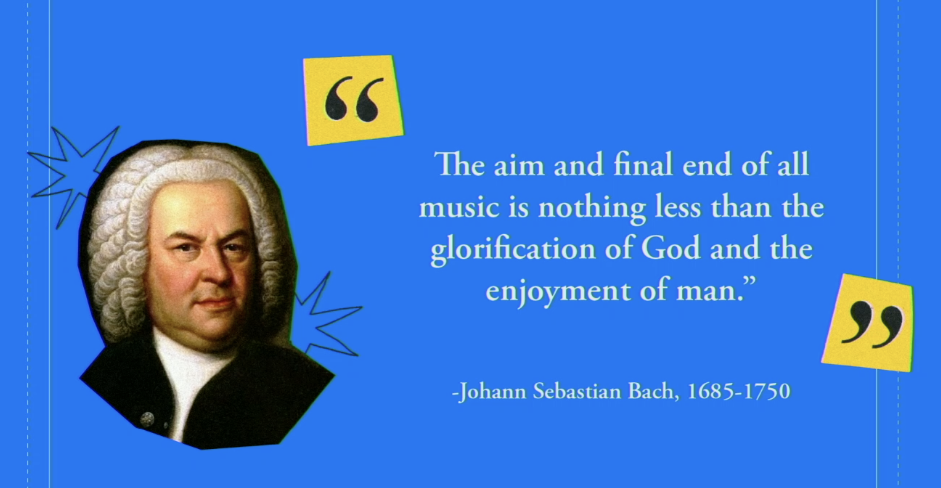
That happy irony, that we significantly benefit ourselves when we are focused on the benefit of others, was one of the conference’s common threads. Brooks illuminated this point with an anecdote about Johan Sebastian Bach’s final composition. It wasn’t a symphony or liturgical work, but a textbook to help students understand the elements of baroque music. “That work was dusted off a hundred years after his death by Felix Mendelssohn, who said, ‘This is the most beautiful music I’ve ever heard!’ and resurrected it as the kind of music we know and love today,” Brooks said. Bach likely never intended the composition for public performance. Rather, Brooks said, “he was dedicating himself to cultivating the beauty and potential of other people.”
Still Curious?
Learn more about Arthur C. Brooks’ writing, teaching and research and Dacher Keltner and Emiliana Simon-Thomas’s research and outreach on research-backed happiness interventions.
Watch recorded sessions from the 2022 In Pursuit of Happiness event on The Atlantic’s YouTube channel.
